



GEO for Small Business: How to Get Cited by ChatGPT and Google AI Overviews
GEO means getting cited inside ChatGPT, Gemini and AI Overviews. How SEO SMO HUB restructures content, schema and entity data to earn it.
SEO gets a page ranked in a list of links. AEO gets one passage chosen as the direct answer in a featured snippet or voice reply. GEO gets a business named and cited inside answers written by ChatGPT, Gemini, Perplexity and Google AI Overviews. AIO is the umbrella: the whole presence arranged so AI systems can read, trust and quote it.
SEO gets a page ranked in a list of links. AEO gets one passage chosen as the direct answer in a featured snippet or voice reply. GEO gets a business named and cited inside answers written by ChatGPT, Gemini, Perplexity and Google AI Overviews. AIO is the umbrella: the whole presence arranged so AI systems can read, trust and quote it.
The four overlap more than the acronyms suggest, and none of them replaces the others. Google's own documentation says there are no special optimizations for AI Overviews or AI Mode beyond the fundamentals, while the research that coined "GEO" found that citing sources, adding statistics and quoting experts lifted visibility in generated answers by 30 to 40 percent. This guide defines each term, states what changed in 2025 and 2026 with the source for every number, and ends with the five things to do first.
| Term | Goal | Where it shows | What you optimize | How you measure |
|---|---|---|---|---|
| SEO (search engine optimization) | Rank pages for queries and earn clicks | Google, Bing and other result pages; Google Discover | Crawlability, indexing, content quality, links, page experience | Search Console and Bing Webmaster Tools: clicks, impressions, position |
| AEO (answer engine optimization) | Be the one passage lifted as the answer | Featured snippets, People Also Ask, voice assistants | A direct 40 to 60 word answer under each question heading, FAQ blocks, clean structure | Search appearance filters in Search Console, snippet tracking in a rank tracker |
| GEO (generative engine optimization) | Be named and cited inside AI-generated answers | AI Overviews, AI Mode, ChatGPT search, Perplexity, Copilot, Gemini | Citable claims with sources, statistics and quotations, entity consistency, crawler access | Search Console generative AI report (impressions), Bing AI Performance (citations), referrals from chatgpt.com and perplexity.ai in analytics |
| AIO (AI optimization) | Make the whole presence readable and trustworthy to AI systems | Everywhere the three above show, plus knowledge panels and brand mentions | Entity data, schema, author identity, llms.txt, robots.txt policy, reviews and profiles | A monthly AI visibility check across engines, brand mention sampling, referral share |
SEO is the work of getting pages indexed and ranked in Google and Bing. In 2026 it is also the entry ticket for everything else: Google states that a page must be "indexed and eligible to be shown in Search with a snippet" to appear in AI Overviews or AI Mode, with "no additional technical requirements". If a page does not rank, it is not a candidate for the AI features either.
What changed is the value of a ranking on informational queries. Ahrefs' February 2026 update of its click study, covering 300,000 keywords, found that the presence of an AI Overview "now correlates with a 58% lower average clickthrough rate for the top-ranking page", comparing December 2023 with December 2025. Pew Research Center measured the same effect from the user side in July 2025: people who saw an AI summary clicked a traditional result in 8 percent of visits, against 15 percent when no summary appeared, across 68,879 searches by 900 US adults in March 2025.
Three actions follow. First, keep the technical base clean: crawlable in robots.txt, internally linked, fast, with important content as text rather than inside images. Google lists exactly these points as its recommendations for AI features. Second, shift effort from informational head terms to queries with commercial or local intent, where a click still has to happen. Third, read Search Console differently: Google counts AI Overview and AI Mode impressions inside the normal "Web" search type, so a flat click line with rising impressions is now a common pattern, not a bug.
Answer engine optimization is the older of the two AI-era terms. It grew out of featured snippets, the boxes that show "the descriptive snippet before the page title and link", and the People Also Ask group that sits beside them. Voice assistants read the same passages aloud. Google is explicit that you cannot mark a page as a featured snippet: its systems decide, and the only controls are nosnippet, data-nosnippet and max-snippet to opt out. The same preview controls limit what AI Overviews can quote; our note on how publishers can opt out of AI Overviews walks through them.
AEO therefore means writing so that the selection is easy. Each question gets its own heading, the answer sits in the first 40 to 60 words beneath it, and the passage stands alone without needing the paragraph before it. Lists and tables are lifted more often than prose because the boundaries are clear. A FAQ section with FAQPage schema does the same job for assistants that read structured data.
The habit carries straight into GEO. A generative engine assembles its answer from passages it can extract cleanly, which is why the question-and-answer layout, the short definition at the top and the table of differences in this guide are the same devices an answer engine rewards. If you learn one writing discipline for 2026, learn this one.
Generative engine optimization has a precise origin. Aggarwal, Murahari, Rajpurohit, Kalyan, Narasimhan and Deshpande published "GEO: Generative Engine Optimization" in November 2023, accepted at KDD 2024. They defined a generative engine as a system that "includes several backend generative models and a search engine for source retrieval", built the GEO-bench benchmark, and reported that GEO "can boost visibility by up to 40% in generative engine responses".
The method results are the useful part. Cite Sources, Quotation Addition and Statistics Addition produced "a relative improvement of 30-40% on the Position-Adjusted Word Count metric". Keyword Stuffing scored below the unoptimized baseline on GEO-bench and, in the authors' Perplexity test, "performs 10% worse than the baseline". In plain terms: engines quote pages that carry evidence, and they skip pages that repeat the query.
The engines themselves grew up in 2025 and 2026. Google launched AI Mode in India in English in June 2025 and in Hindi for users worldwide on 8 September 2025, on "a custom version of Gemini 2.5". OpenAI documents a dedicated crawler, OAI-SearchBot, and states that "Sites that are opted out of OAI-SearchBot will not be shown in ChatGPT search answers". Perplexity's PerplexityBot "is not used to crawl content for AI foundation models" and exists to surface and link sites in its results. Our own GEO guide covers the service side in depth; the free AI search course walks through it lesson by lesson.
Five concrete actions. Allow OAI-SearchBot, PerplexityBot, ClaudeBot and the Bing and Google crawlers in robots.txt, and keep GPTBot and Google-Extended decisions separate, because those control training and grounding, not search. Add a named, dated source to every statistic on your key pages. Quote a real person with a role, not an anonymous "expert". Use Article, FAQPage and Organization schema that matches the visible text, since Google warns that structured data must stay consistent with the page. Publish an llms.txt file that lists your most citable pages; our llms.txt explainer shows the format, with the caveat that Google says it needs no such file for its own features.
AIO has no single owner, and that is worth saying plainly. Agency blogs use "AI optimization" for three different things: a strategy that covers AEO and GEO together, a shorthand for Google's AI Overviews, and the use of AI tools to run marketing. We use the first meaning, the same one in our AIO explainer in Hindi: arranging the whole presence so AI systems can read, trust and quote it.
Under that definition AIO is less about any one page and more about identity. Does the business name appear the same way on the website, Google Business Profile, LinkedIn, Wikidata and the directories an engine checks? Does every article carry a named author with a bio and Person schema, the E-E-A-T signals Google's raters look for? Are reviews, awards and press mentions findable on pages the engines already trust? A generative engine resolves the entity first and the page second, so inconsistency costs citations before the content is even read.
Four actions. Audit the entity: one legal name, one logo, one founder, one city, repeated verbatim everywhere. Give every author a page with a photo, a bio and sameAs links. Fix the robots.txt policy once, with a line per crawler and a reason. Sample the engines monthly with the twenty questions your buyers actually ask, record which brands are named, and treat that list as the scoreboard.
Google gave site owners their first dedicated numbers on 3 June 2026 with Search Generative AI performance reports in Search Console, rolled out to all websites worldwide by 31 August 2026. They show impressions only, defined as "how often URLs from your site appeared in generative AI features in Search and Discover", broken down by page, country, device and date. There is no click column, and AI Overviews and AI Mode are not separated.
Bing went further earlier. The AI Performance report in Bing Webmaster Tools, announced on 10 February 2026, lists total citations in Copilot and Bing AI answers, the average number of cited pages per day, grounding queries and page-level citation counts. Microsoft's guidance in that post reads like a GEO checklist: clear headings, tables, FAQ sections, claims supported by evidence, content kept current and IndexNow pings on every change.
The third source is your own analytics. Referrals from chatgpt.com, perplexity.ai, copilot.microsoft.com and gemini.google.com are the clicks the Search Console report does not show. We publish our own number on the GEO service page; in October 2026, 13 percent of our human visitors arrived from ChatGPT links. Check the SERP snippet preview when you rewrite titles and descriptions, since those are what the AI features quote when they list a link.
India is one of the first markets where every engine above is live in two languages. AI Mode arrived in English in June 2025 and in Hindi three months later, and Hindi queries now return generated answers that cite Hindi and English pages side by side. A Jaipur clinic or a Surat manufacturer asked about on Google in Hindi is competing for a citation, not just a ranking, from the first search.
The practical consequence is that the local fundamentals matter more, not less. A complete Google Business Profile, consistent Hindi and English naming, reviews on platforms the engines index and a page that answers "kitna kharcha" questions in plain numbers are the inputs a generative engine needs to name you. It is the same AIO work described above, done in both scripts.
SEO earns a ranked link on a results page; GEO earns a citation inside an AI-written answer from ChatGPT, Gemini, Perplexity or Google AI Overviews. GEO depends on SEO, because Google states that only indexed pages eligible for a snippet can appear in AI Overviews or AI Mode. GEO then adds sourced statistics, quotations and consistent entity data, the methods the 2024 KDD paper found most effective.
No. AEO (answer engine optimization) targets featured snippets, People Also Ask boxes and voice assistants, where one passage from one page is shown as the answer. GEO targets generative engines that write a new answer and cite several sources. The writing habit is shared: a direct 40 to 60 word answer under each question heading serves both.
AIO, or AI optimization, has no single definition. Agencies use it for a strategy that combines AEO and GEO, as shorthand for Google's AI Overviews, or for using AI tools in marketing. We use the first meaning: arranging the whole presence, from entity data and author pages to schema and robots.txt, so AI systems can read, trust and quote a business.
No. Google's AI features documentation says there are no additional requirements, no new machine-readable files or AI text files, and no special structured data needed to appear in AI Overviews or AI Mode. Structured data that matches the visible text still helps the page be understood. llms.txt is useful for other engines and for listing citable pages, not a Google requirement.
Use three sources. Search Console's Search Generative AI performance report, available to all sites since 31 August 2026, shows impressions in AI Overviews and AI Mode by page, country and device, with no click data. Bing Webmaster Tools' AI Performance report shows citations in Copilot and Bing AI answers. Your analytics show referrals from chatgpt.com, perplexity.ai and copilot.microsoft.com.
Blocking them does not remove you from search answers, and allowing them does not add you. GPTBot controls OpenAI model training, while ChatGPT search uses OAI-SearchBot. Google-Extended controls Gemini training and grounding and, per Google, is not a ranking signal and does not affect Search inclusion. Decide on training separately from search, and keep OAI-SearchBot and PerplexityBot allowed if you want citations.
 SEO
GEO means getting cited inside ChatGPT, Gemini and AI Overviews. How SEO SMO HUB restructures content, schema and entity data to earn it.
 SEO
SEO trends for late 2026: AI Overviews and AI Mode, new AI reports in Search Console and Bing, GEO, core updates, zero-click and a 90-day plan.
 SEO
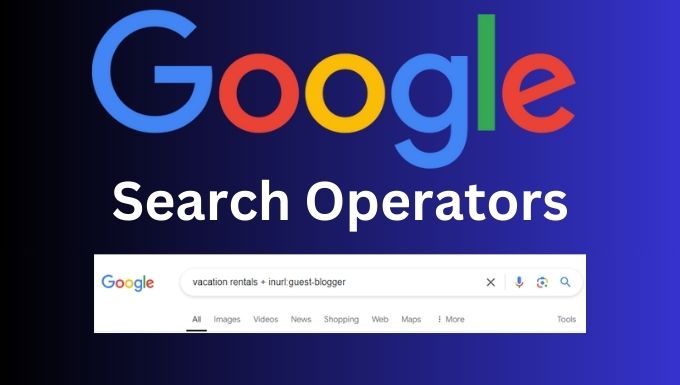
Which Google search operators still work in 2026, which were retired, a quick-reference table, 5 worked SEO examples and 45 link building queries.