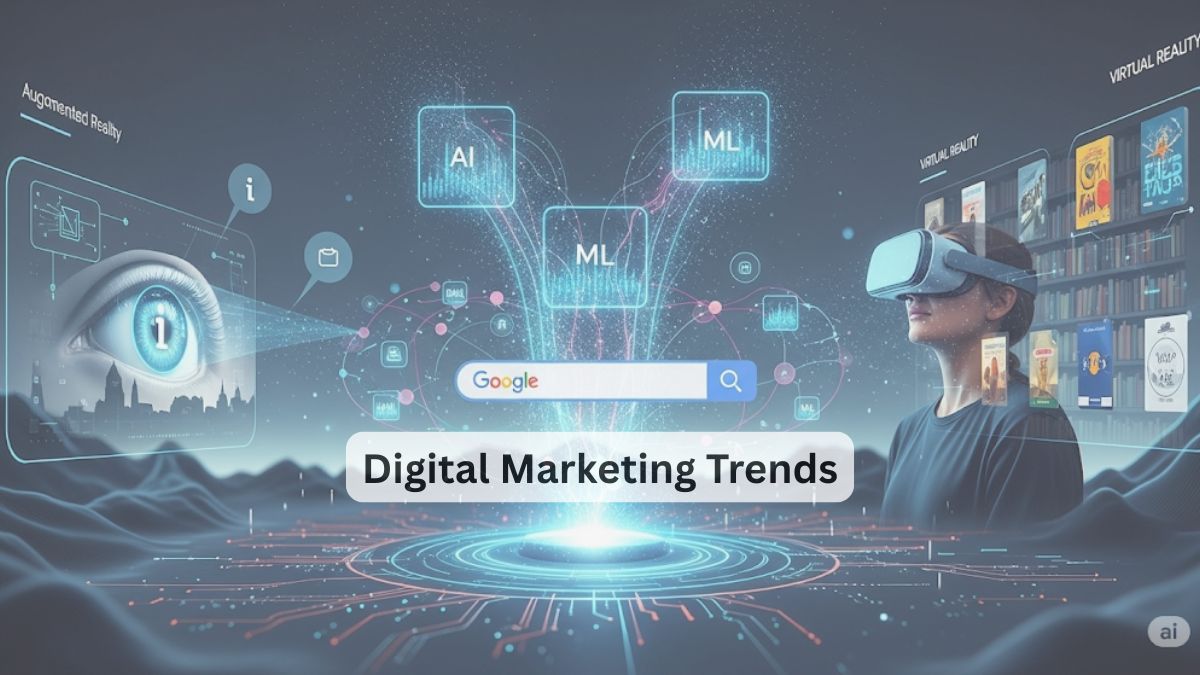

The digital marketing landscape in 2026 is undergoing its most dramatic transformation since the rise of social media. With AI-powered search engines processing over 2.5 billion queries monthly and traditional search volume predicted to drop 25%, businesses must adapt to survive. This comprehensive guide reveals the 15 trends defining digital marketing success in 2026—from Generative Engine Optimization (GEO) to agentic AI automation.
Whether you’re a marketer, business owner, or digital strategist, these insights will help you stay competitive in an AI-driven marketplace where visibility happens inside AI-generated answers, not just on search results pages.
1. Generative Engine Optimization (GEO): The New SEO Frontier
What’s Changed in 2026: While traditional SEO focuses on ranking in Google search results, Generative Engine Optimization (GEO) targets visibility in AI-generated answers from ChatGPT, Perplexity, Google Gemini, and Claude. McKinsey predicts $750 billion in revenue will flow through AI search by 2028, making GEO optimization critical for brand survival.
Why This Matters: By October 2025, 50% of consumers were using AI-powered search as their primary discovery method. When potential customers ask ChatGPT “What’s the best [your product category]?” your brand must be in that AI-generated answer—or you’re invisible to half your market.
How to Implement GEO in 2026:
- Structure content for AI understanding: Use schema markup extensively (FAQPage, Article, Product, Organization types). AI tools rely on structured data to understand context and cite sources accurately.
- Create citation-worthy content: AI systems prioritize content demonstrating E-E-A-T (Experience, Expertise, Authoritativeness, Trustworthiness). Feature credentials, cite data, link to reputable sources, and provide content authored by credible experts.
- Write conversationally: GEO rewards natural language over keyword stuffing. Answer specific questions clearly and directly—this is what AI engines extract and cite.
- Track AI visibility: Use tools like Goodie AI, Anvil, or Rankscale to monitor how often your brand appears in ChatGPT, Gemini, and Perplexity responses. Optimize based on citation frequency.
- Build digital authority: Earn mentions on high-authority sites, publish original research, and maintain consistent NAP (Name, Address, Phone) data across platforms. AI systems cross-reference multiple sources before citing brands.
Pro Tip: Content optimized for GEO achieves 43% higher citation rates on average. Start by optimizing your top 10 pages with FAQ schema and conversational content structures that directly answer common customer questions.
2. Voice Search Optimization: Beyond Smart Speakers

Voice search continues evolving beyond Amazon Alexa and Apple Siri. By 2026, voice commands integrate seamlessly across AR glasses, automotive systems, and wearable devices. The rise of multimodal search—combining voice, visual, and text inputs—means optimization strategies must account for conversational queries across multiple interfaces.
Key Updates for 2026:
- Optimize for conversational long-tail keywords: Voice queries average 7-10 words vs. 2-3 for typed searches. Use keyword research tools to identify question-based phrases your audience asks.
- Focus on local intent: 58% of consumers use voice search to find local business information. Ensure your meta descriptions and content answer “near me” queries with specific location details.
- Provide concise answers: Voice assistants prioritize content that directly answers questions in 29-40 words. Structure your content with clear, scannable answers that AI can extract and read aloud.
- Implement “speakable” schema markup: Use the Speakable schema property to indicate which sections of your content are ideal for text-to-speech conversion.
Action Step: Test your content with keyword density analyzers to ensure natural language flow that matches how people actually speak, not just type.
3. Agentic AI & Autonomous Marketing Systems

The Game-Changer in 2026: We’ve moved from AI-assisted marketing to agentic AI—autonomous systems that independently plan, execute, and optimize entire campaigns without constant human oversight. According to McKinsey, 62% of organizations are experimenting with agentic AI, but only 23% have scaled implementation. 2026 is the inflection point where autonomous marketing moves from pilots to production.
What Agentic AI Can Do Now:
- Self-optimize campaigns in real-time: Continuously test creative variations, audiences, and bidding strategies—implementing winners automatically without human approval.
- Allocate budgets intelligently: Shift spending across channels based on performance predictions, eliminating weeks of analysis and manual adjustments.
- Generate dynamic content at scale: Create personalized emails, ads, and landing pages tailored to individual recipients using generative AI that learns from engagement patterns.
- Predict customer intent: Proactively initiate outreach based on churn risk, purchase likelihood, or lifecycle stage transitions.
- Manage workflows autonomously: Schedule, launch, and optimize campaigns with minimal human oversight, scaling operations without proportional headcount increases.
Critical Reality Check: 80.6% of marketers report their AI agents operate in “assist only” mode—meaning the AI suggests and a human decides. True autonomous systems (where AI acts and humans review after the fact) represent only 14.6% of implementations. Start with Level 2-3 automation before advancing to fully autonomous systems.
Implementation Strategy: Begin by automating content generation and performance tracking. Use AI-powered content tools to scale production while maintaining quality. Track ROI rigorously before expanding automation to budget allocation and strategic decisions.
4. Hyper-Personalization at Scale

Personalization in 2026 isn’t just inserting names into emails—it’s delivering individualized experiences across every touchpoint using real-time behavioral data. AI analyzes patterns to predict what each customer needs before they ask. Brands using AI-driven personalization report 35% revenue increases in e-commerce applications.
What’s Different in 2026:
- Predictive personalization: AI anticipates needs based on micro-behaviors (scroll depth, hesitation patterns, time-on-page) and adjusts content dynamically.
- Cross-channel consistency: The same intelligence powering your email should power your media, website, app, and offers. Unified identity layers resolve customers across devices and platforms for seamless experiences.
- Privacy-first approaches: With third-party cookies gone, personalization relies on zero-party data (information customers voluntarily share) and first-party data (behavioral data from your owned channels). Privacy-compliant systems become competitive advantages.
- Contextual personalization: AI considers time, location, device, weather, and dozens of other contextual signals to serve the right message at the perfect moment.
Success Metric: Studies show personalized marketing can boost conversions by up to 10%, but 2026 leaders achieve 30-40% improvements by combining AI prediction with real-time behavioral triggers. Track micro-conversions (engagement depth, return visits, content consumption) not just macro-conversions (sales).
Tool Recommendation: Use authority tracking and social metrics analysis to identify which personalization tactics drive the highest engagement across audience segments.
5. Micro and Mega-Creator Partnerships

Influencer marketing in 2026 splits into two distinct strategies: micro-influencers (10K-100K followers) for niche engagement and mega-creators (10M+ followers) for mass awareness. 2026 is the year mega-creators with tens of millions of followers accept only long-term brand partnerships, functioning as brand ambassadors rather than one-off promoters.
The Micro-Influencer Advantage:
- Higher engagement rates: Micro-influencers average 3-10% engagement vs. 1-3% for mega-creators. Smaller, highly engaged audiences trust recommendations more.
- Niche targeting: Partner with micro-influencers who serve specific demographics (B2B SaaS, sustainable fashion, tech enthusiasts) for precise audience alignment.
- Cost efficiency: Micro-influencer campaigns cost 75-90% less than celebrity partnerships while often delivering superior ROI in niche markets.
- Authenticity: Audiences perceive micro-influencers as “real people” vs. paid celebrities, increasing trust and conversion rates.
The Mega-Creator Model: Brands invest deeply in influencer partnerships—launching co-branded products, giving creators company roles (like financial creator Vivian Tu becoming SoFi’s Chief of Financial Empowerment), and building long-term relationships. This “treating influencers like humans” approach recognizes they offer more value than simple link placement.
Emerging Trend: B2B influencer marketing explodes in 2026 as tech continues driving the economy. LinkedIn thought leaders and industry experts command higher fees but deliver decision-maker access traditional ads can’t match.
Tracking ROI: Use backlink analysis tools and link performance tracking to measure referral traffic, engagement quality, and conversion attribution from influencer partnerships.
6. Social Media Stories & Ephemeral Content

Social media stories continue dominating with more than 500 million daily users, but 2026 introduces significant shifts. Lo-fi storytelling (unpolished, authentic content) outperforms overproduced content as audiences crave genuine connection over brand perfection.
2026 Story Strategy:
- Behind-the-scenes authenticity: Showcase team culture, product development, and “imperfect” moments. Audiences reward transparency with higher engagement.
- Interactive elements: Polls, quizzes, question stickers, and swipe-up features (where available) drive 2-3x higher engagement than static stories.
- Story highlights for permanent content: Archive your best stories into themed highlights (Product Tours, Customer Reviews, Team Culture) for lasting value beyond 24 hours.
- Cross-platform story repurposing: Create once, distribute across Instagram, Facebook, Snapchat, and LinkedIn Stories to maximize reach.
Critical Insight: Younger demographics (Gen Z and younger Millennials) prefer stories over feed posts by a 2:1 margin. If your target audience skews younger, stories should comprise 60-70% of your social content budget.
Content Planning: Use content optimization checklists to plan story sequences that guide viewers through customer journeys—from awareness (problem introduction) to consideration (solution showcase) to decision (testimonials and offers).
7. Interactive Content Experiences

Static content loses the attention war in 2026. Interactive content—quizzes, polls, calculators, interactive videos, and personalized assessments—drives 2-3x higher engagement than passive content while generating valuable first-party data.
High-Performing Interactive Formats in 2026:
- Assessment tools & calculators: “What’s Your [Solution] ROI?” calculators generate leads while providing immediate value. Create calculators using simple calculation tools embedded directly on landing pages.
- Branching scenario quizzes: “Find Your Perfect [Product]” quizzes with conditional logic that recommends specific solutions based on user answers.
- Interactive infographics: Scroll-triggered animations, hover states revealing details, and clickable data visualizations keep users engaged 4x longer than static infographics.
- Shoppable videos: Video content with embedded product links, clickable hotspots, and purchase options without leaving the video player. Shoppable video conversions in 2026 average 30% higher than traditional product pages.
- Virtual product configurators: Interactive 3D models allowing customers to customize products (colors, features, accessories) before purchase.
Data Advantage: Interactive content generates zero-party data—information users voluntarily provide in exchange for value. This opt-in data is more valuable than third-party cookies and fully compliant with privacy regulations.
Lead Generation Impact: Interactive content generates 4-5x more qualified leads than static whitepapers because engagement signals buyer intent more accurately than passive downloads.
8. Visual & Multimodal Search

Visual search evolves into multimodal search in 2026—users combine images, voice, and text inputs simultaneously. Google Lens processes billions of visual queries monthly, while Pinterest Lens and Amazon’s visual search drive significant e-commerce traffic.
How to Optimize for Visual & Multimodal Search:
- High-quality product images: Use multiple angles, zoom capability, and lifestyle context shots. Images with 5+ views per product increase conversion rates by 40%.
- Descriptive file names: Name images “red-leather-handbag-gold-hardware.jpg” not “IMG_1234.jpg”. Search engines and AI tools read file names to understand image content.
- Comprehensive alt text: Describe images in 10-15 words including product details, colors, materials, and context. AI vision models use alt text to verify image understanding.
- Structured image data: Implement ImageObject schema markup with properties like caption, contentUrl, width, height, and license information.
- Optimize image technical factors: Fast loading times (use WebP format), mobile responsiveness, and proper sizing prevent search engines from deprioritizing your visuals. Use image compression tools to maintain quality while reducing file size.
Pro Tip: Visual search queries convert 3x higher than text searches because users searching with images already know what they want. Prioritize visual optimization for product categories with high browse-to-buy intent (fashion, home decor, electronics).
9. Social Commerce & In-App Purchasing

Social commerce explodes in 2026 as platforms perfect native shopping experiences. TikTok Shop, Instagram Shopping, Facebook Marketplace, and Pinterest Product Pins collectively process over $100 billion in annual transactions, representing a fundamental shift from “link out” to “purchase now.”
Key Social Commerce Trends for 2026:
- Live shopping events: TikTok and Instagram Live Shopping sessions generate 10x higher conversion rates than traditional product pages. Host weekly live product demonstrations with limited-time offers.
- Shoppable posts & stories: Tag products directly in organic content, enabling impulse purchases without leaving the app. 42% of Gen Z consumers make social media purchases monthly.
- Social proof integration: User-generated content (UGC) embedded in product listings increases purchase confidence. Feature customer photos, reviews, and videos prominently.
- Influencer storefronts: Creators curate branded collections of your products, earning commission on sales while driving authentic recommendations to engaged audiences.
- AR try-on experiences: Virtual try-on features for fashion, cosmetics, and home decor reduce return rates by 40% while increasing purchase confidence.
Platform Strategy: Don’t spread thin—dominate 1-2 platforms where your audience concentrates. B2B brands focus on LinkedIn, fashion targets Instagram/TikTok, home goods leverage Pinterest, and broad consumer products test Facebook/Instagram Shops.
Conversion Optimization: Streamline checkout flows, offer multiple payment options (Apple Pay, Shop Pay, PayPal), and provide transparent shipping costs upfront. Every additional click in the purchase process reduces conversion by 10-20%.
10. User-Generated Content (UGC) as Core Strategy

UGC isn’t supplementary content in 2026—it’s the foundation of trust. Reddit’s massive growth in 2024 sparked a shift toward user-generated content and community engagement that continues accelerating. Platforms with authentic peer content (Reddit, Quora, TikTok reviews) increasingly influence purchase decisions.
Why UGC Dominates in 2026:
- Trust factor: 92% of consumers trust peer recommendations over brand messaging. UGC provides authentic social proof that polished brand content cannot match.
- Conversion impact: Studies show UGC can increase conversions by up to 29% when featured on product pages, landing pages, and ad creative.
- Cost efficiency: UGC costs 70-90% less to produce than professional branded content while often delivering higher engagement.
- SEO benefits: Original, authentic content from users provides fresh keywords, long-tail search terms, and natural language that improves organic visibility.
- Community building: Featuring customer content strengthens brand loyalty and incentivizes continued engagement and advocacy.
UGC Collection Strategies:
- Branded hashtag campaigns: Create memorable hashtags (#YourBrandChallenge) and incentivize sharing with contests, features, or discounts.
- Review solicitation: Systematically request reviews post-purchase via email automation, offering small incentives (10% off next purchase) for detailed feedback.
- Social listening: Use social monitoring tools to discover unsolicited brand mentions, then request permission to feature that content.
- Creator programs: Build communities of brand advocates who regularly create content in exchange for early product access, exclusive perks, or affiliate commissions.
Legal Compliance: Always secure explicit permission before repurposing user content. Use clear terms when running UGC campaigns, and provide easy opt-out mechanisms. Reference terms and conditions generators to create compliant UGC usage policies.
11. Short-Form Video Dominance

Short-form video (15-90 seconds) remains the king of engagement in 2026. TikTok, Instagram Reels, YouTube Shorts, and Snapchat Spotlight collectively generate over 200 billion video views daily. This format dominates attention, particularly among audiences under 35.
What Makes Short-Form Video Effective:
- Algorithm favoritism: All major platforms prioritize video content in feeds and recommendation engines, delivering 5-10x more organic reach than static posts.
- Scroll-stopping power: Motion and sound capture attention faster than images or text, increasing the likelihood users stop scrolling and engage.
- Story compression: Effective short-form videos deliver complete narratives in under 60 seconds—hook, value, and call-to-action—matching decreasing attention spans.
- Shareability: Short videos are easier to consume and share than long-form content, increasing viral potential exponentially.
2026 Video Strategy:
- Hook in 3 seconds: Users decide whether to keep watching in 2-3 seconds. Start with movement, surprising statements, or questions that create curiosity gaps.
- Educate or entertain: The most successful brands choose one lane—educational value (how-to’s, tips, insights) or entertainment (humor, storytelling, behind-the-scenes). Mixing both dilutes brand identity.
- Embrace trends strategically: Participate in trending sounds, formats, and challenges when they align with brand values. Force-fitting trends for visibility backfires with audience skepticism.
- Repurpose systematically: Create one piece of long-form content (podcast episode, webinar, product demo), then extract 10-20 short clips optimized for different platforms. Use content expansion tools to generate multiple angles from single concepts.
- Include captions always: 85% of video views happen with sound off. Burned-in captions or platform captions ensure message delivery regardless of audio status.
Production Reality: Polished, overproduced videos underperform in 2026. Authentic, lo-fi content shot on smartphones generates higher engagement because it feels native to platforms and resonates with audiences craving genuine connection over corporate perfection.
12. Sustainability & Purpose-Driven Marketing

Sustainability transcends trend status in 2026—it’s a brand survival requirement. 73% of consumers prefer brands aligned with their values, and younger demographics (Gen Z, Millennials) actively boycott companies with poor environmental or social records.
Critical Shift: “Joy-Driven Sustainability” emerges as the winning approach. Rather than guilt-tripping consumers about environmental impact, successful brands position sustainable choices as personally fulfilling and aspirational—connecting eco-consciousness to quality of life improvements.
Authentic Sustainability Marketing in 2026:
- Transparent supply chains: Show exactly where products come from, how they’re made, and the environmental impact at each stage. Use structured data to mark up sustainability credentials for AI search visibility.
- Certifications & proof: Display B Corp certification, carbon-neutral shipping, Fair Trade labels, and third-party environmental audits prominently. Back claims with verifiable data.
- Avoid greenwashing: Vague claims (“eco-friendly,” “natural”) without substantiation damage trust. Specificity wins: “30% post-consumer recycled materials” > “environmentally conscious packaging.”
- Measure and report impact: Share concrete metrics: “We’ve diverted 50,000 lbs from landfills” or “Our packaging saves 200 gallons of water per unit vs. industry standard.”
- Empower customer participation: Create programs where customers contribute to sustainability efforts—recycling initiatives, tree-planting partnerships, or carbon offset options at checkout.
Messaging Strategy: Connect sustainability to personal benefits, not just planetary ones. Example: “Sustainable materials mean longer-lasting products = fewer replacements = more money in your pocket + less environmental waste.” Frame eco-conscious choices as smart, aspirational decisions.
Compliance Note: Use policy generators to create transparent sustainability statements and environmental impact disclosures that meet regulatory requirements while building customer trust.
13. Augmented Reality (AR) Marketing Experiences
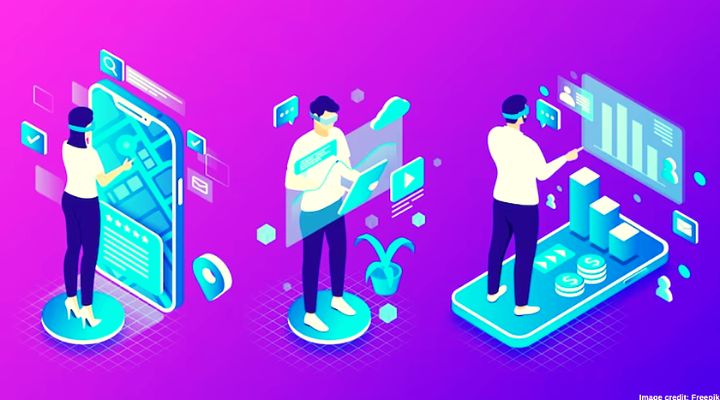
2026 is the breakthrough year for consumer AR. Snapchat’s AR Spectacles and Meta’s AR glasses reach consumers, creating wearable AR experiences beyond smartphone screens. This represents a fundamental shift in how customers discover and interact with brands.
AR Marketing Applications in 2026:
- Virtual try-on: Fashion, eyewear, cosmetics, and jewelry brands enable customers to visualize products on themselves before purchase, reducing returns by 40% while increasing conversion rates 30%.
- Product placement visualization: Furniture, home decor, and appliance brands let customers see products in their actual spaces using smartphone cameras or AR glasses, eliminating size/style uncertainty.
- Interactive packaging: Scanning product packaging triggers AR experiences—assembly instructions, product origin stories, recipe suggestions, or gamified brand engagement.
- Location-based AR: Pop-up AR experiences triggered by location (store proximity, landmark visibility, event attendance) deliver contextually relevant content and offers directly to AR glass wearers.
- AR advertising: Digital billboards, magazine ads, and product displays come to life when viewed through AR-enabled devices, creating memorable interactive brand experiences.
Implementation Strategy:
- Start with Web AR: Browser-based AR experiences (no app downloads required) reduce friction. Customers access AR features via URL links, making adoption seamless.
- Platform-specific AR: Snapchat Lenses, Instagram AR filters, and TikTok effects reach millions without custom app development. Create branded AR experiences within platforms users already use daily.
- Measure engagement depth: Track AR session duration, interaction frequency, and conversion correlation. Users who engage with AR features convert 2-3x higher than those who don’t, but only if AR adds genuine value.
Reality Check: AR adoption accelerates but remains early-stage for most consumers. Prioritize smartphone AR experiences (100% audience accessibility) before investing heavily in AR glass-specific content targeting the early adopter niche.
14. Privacy-First Marketing & Zero-Party Data

With third-party cookies extinct and privacy regulations tightening globally, privacy-first marketing becomes the only viable approach in 2026. Brands that treat privacy as a competitive advantage—not a compliance burden—gain customer trust and superior data quality simultaneously.
The Data Hierarchy in 2026:
- Zero-party data (most valuable): Information customers intentionally share—preferences, purchase intentions, personal context. Collected via preference centers, quizzes, surveys, and account profiles. 100% compliant and highly accurate.
- First-party data: Behavioral data from owned channels—website activity, email engagement, purchase history. Collected with explicit consent via cookie notices and privacy policies.
- Second-party data: First-party data shared by trusted partners (e.g., retailers sharing data with brands). Requires clear data-sharing agreements and customer consent.
- Third-party data (deprecated): Purchased from data brokers, tracking users across non-affiliated sites. Increasingly unavailable, unreliable, and non-compliant.
Privacy-First Implementation:
- Value exchange transparency: Clearly communicate what data you collect, why you need it, and what value customers receive in return (personalized recommendations, exclusive content, better experiences).
- Preference centers: Give customers granular control over data sharing, communication frequency, and personalization depth. Empowered customers share 2-3x more data voluntarily.
- Progressive profiling: Collect data gradually over multiple interactions rather than demanding comprehensive information upfront. Each interaction builds deeper understanding without overwhelming customers.
- Data minimization: Collect only data necessary for stated purposes. Excessive data collection triggers privacy concerns and regulatory scrutiny.
- Clear privacy policies: Use privacy policy generators to create compliant, comprehensible privacy statements. Avoid legal jargon—explain data practices in plain language.
Competitive Advantage: Brands with transparent data practices and robust privacy protections achieve 40% higher customer lifetime value because trust drives retention, repeat purchases, and word-of-mouth recommendations.
Compliance Resources: Ensure website compliance with robots.txt configuration, proper meta tag implementation, and SSL certificate validation to protect user data and meet regulatory requirements.
15. Omnichannel Marketing & Unified Experiences
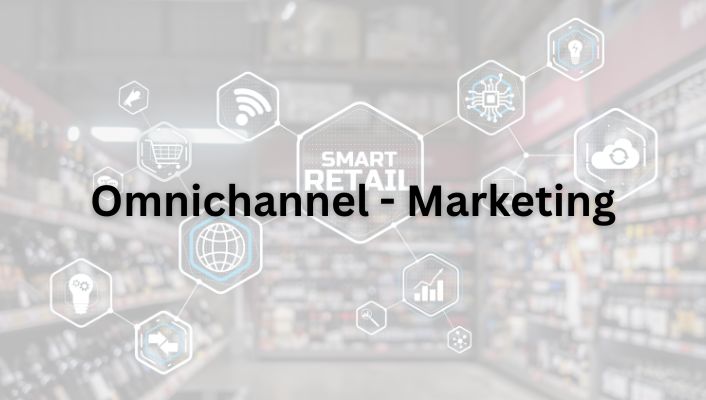
The final trend unifying all others: In 2026, customers don’t think in channels—they expect seamless experiences across every touchpoint. Omnichannel marketing means your email, social media, website, retail stores, customer service, and advertising deliver consistent messaging and connected experiences.
What True Omnichannel Looks Like in 2026:
- Unified customer profiles: Single view of each customer combining behavioral data, purchase history, communication preferences, support interactions, and demographic details across ALL channels.
- Cross-channel campaign orchestration: Campaigns trigger actions across email, SMS, push notifications, social ads, and direct mail based on customer behavior—automatically and in real-time.
- Channel-agnostic content: Repurpose content strategically across channels. Turn blog posts into short-form videos, email newsletters, social posts, and podcast episodes. Use content rephrasing tools to adapt messaging for different platforms while maintaining core narrative.
- Consistent brand voice: Whether customers engage via Instagram DM, phone call, chatbot, or in-store visit, they receive the same brand personality, service quality, and information accuracy.
- Seamless transitions: Customers can start interactions on one channel (browse products on mobile app) and continue on another (complete purchase on desktop website) without losing context or starting over.
Technology Requirements:
- Marketing automation platform: Centralized system orchestrating communications across channels (email, SMS, push, webhooks).
- Customer Data Platform (CDP): Unifies customer data from disparate sources into single, actionable profiles.
- Attribution modeling: Tracks customer touchpoints across channels to understand which interactions drive conversions and optimize budget allocation.
- API integrations: Connect martech tools so data flows seamlessly between systems (CRM ↔ marketing automation ↔ analytics ↔ advertising platforms).
Success Metric: Omnichannel customers spend 30% more and have 90% higher retention rates than single-channel customers. Measure cross-channel engagement (how many channels each customer uses) as a leading indicator of lifetime value.
Implementation Tip: Start with 2-3 core channels and perfect integration before expanding. Mediocre presence across 10 channels underperforms excellent execution on 3 channels. Use link audit tools and broken link checkers to ensure seamless navigation across your digital ecosystem.
How to Implement These Trends: Your 2026 Action Plan
Fifteen trends can feel overwhelming. Here’s how to prioritize based on business type and resources:
For Small Businesses (Limited Budget):
- Start with GEO fundamentals: Implement FAQ schema and optimize your top 10 pages for conversational queries. This costs $0 but delivers immediate AI visibility improvements.
- Leverage micro-influencers: Partner with 5-10 local or niche micro-influencers (free product exchange or small fees) for authentic endorsements reaching targeted audiences.
- Create short-form video: Invest in smartphone video creation (under $500 for basic equipment). Focus on educational content showing your expertise and behind-the-scenes authenticity.
- Build email list with zero-party data: Use preference centers and interactive quizzes to collect valuable customer data while providing personalized value.
- Monitor with free tools: Track performance using free visibility checkers, rank tracking, and social analytics.
For Mid-Market Companies (Moderate Budget):
- Implement agentic AI strategically: Start with AI content generation for social posts, email campaigns, and blog ideation. Gradually expand to campaign optimization.
- Develop omnichannel presence: Integrate 3-4 core channels (email, social, website, one paid channel) with unified messaging and customer data.
- Launch social commerce: Set up Instagram Shopping or TikTok Shop with shoppable posts driving direct sales.
- Invest in UGC programs: Create systematic review collection, hashtag campaigns, and customer content features.
- Test AR experiences: Implement web-based AR product visualization or platform-native AR filters (Snapchat Lenses, Instagram effects).
For Enterprise Organizations (Large Budget):
- Full agentic AI implementation: Deploy autonomous systems for campaign management, budget optimization, and predictive analytics with human oversight.
- Enterprise GEO strategy: Hire specialists or agencies focused on AI search optimization across ChatGPT, Gemini, Perplexity, and Claude.
- Advanced personalization: Implement AI-driven hyper-personalization across all touchpoints with unified customer data platforms and real-time decisioning.
- Mega-creator partnerships: Establish long-term ambassador relationships with top-tier influencers including co-branded products and executive roles.
- Proprietary AR development: Build custom AR applications, native mobile experiences, and prepare for AR glasses ecosystem launch.
Measuring Success: KPIs for 2026 Marketing
Traditional metrics (pageviews, click-through rates) decline in importance as AI search changes discovery patterns. Focus on these 2026-relevant KPIs:
- AI visibility score: Frequency your brand appears in ChatGPT, Gemini, and Perplexity responses for category-relevant queries. Track with GEO-specific tools.
- Brand mention velocity: Rate at which new mentions (citations, social references, media coverage) appear across the web—signals AI systems use to determine authority.
- Zero-party data collection rate: Percentage of customers voluntarily sharing preference and intent data. Higher rates indicate strong value exchange and trust.
- Cross-channel engagement depth: Average number of channels each customer actively uses. Strong omnichannel presence correlates with 30% higher LTV.
- Assisted conversion attribution: Revenue influenced by AI agents, chatbots, and automated systems vs. direct human-initiated conversions.
- Content interaction time: How long users engage with interactive content, videos, and immersive experiences. Better predictor of conversion than pageviews.
- Social commerce conversion rate: Percentage of social media product views resulting in purchases without leaving the platform.
- Customer sentiment analysis: AI-powered analysis of UGC, reviews, and social mentions revealing emotional response to brand. Use sentiment analysis tools for automated monitoring.
Dashboard Essentials: Create unified dashboards combining traditional analytics (Google Analytics, social platform insights) with AI-specific metrics (GEO tracking, agentic system performance). Track trends weekly but evaluate major strategic shifts monthly to avoid reactionary decision-making based on short-term fluctuations.
Common Mistakes to Avoid in 2026
As you implement these trends, avoid these critical pitfalls:
- Chasing every trend simultaneously: Spreading resources across 15 initiatives delivers mediocre results everywhere. Choose 3-5 priority trends aligned with business goals and customer needs.
- Implementing AI without strategy: 95% of generative AI pilots fail to deliver measurable business value due to lack of strategic alignment. Define clear objectives before deploying AI systems.
- Ignoring privacy regulations: Privacy violations destroy trust instantly and trigger severe financial penalties. Ensure compliance with GDPR, CCPA, and regional regulations before launching campaigns.
- Over-automating customer interactions: 72% of consumers want human options for complex issues. Agentic AI should enhance, not replace, human touchpoints for high-stakes decisions.
- Producing content without distribution strategy: Creating great content means nothing if nobody sees it. Allocate 20% of resources to creation, 80% to strategic distribution and amplification.
- Measuring vanity metrics: Pageviews, impressions, and follower counts don’t pay bills. Focus on revenue-impacting metrics: conversions, customer acquisition cost, lifetime value, and attribution.
- Neglecting mobile optimization: 60%+ of digital interactions happen on mobile devices. Test every experience on smartphones first, desktop second. Use mobile responsiveness checkers regularly.
- Assuming AI outputs are perfect: AI generates errors, biases, and hallucinations. Always implement human review for customer-facing content, strategic decisions, and brand-critical communications.
The Future Beyond 2026
Looking ahead, several emerging patterns suggest where digital marketing heads next:
- Agent-to-agent commerce: By 2027-2028, expect AI shopping agents negotiating directly with brand AI agents to complete transactions without human involvement. Brands must ensure their systems can communicate effectively with consumer AI assistants.
- Spatial computing integration: As AR glasses become mainstream (2027-2029), marketing shifts to three-dimensional experiences integrated into physical environments—virtual storefronts, holographic product demonstrations, and persistent digital content layers over real-world locations.
- Quantum computing impact: While years away from mainstream, quantum computing will eventually revolutionize personalization, enabling real-time optimization of marketing variables at scales impossible with classical computing.
- Ethical AI governance: Expect increased regulation around AI transparency, algorithmic bias, and automated decision-making. Brands prioritizing ethical AI implementation now will avoid costly retrofits later.
The constant? Change. Digital marketing evolves faster than ever. Success belongs to organizations embracing continuous learning, rapid experimentation, and customer-centric adaptation.
Your 2026 Marketing Roadmap
These 15 digital marketing trends aren’t predictions—they’re happening now. Early adopters gain significant competitive advantages before these strategies become industry standard and lose differentiation power.
Your 90-Day Implementation Plan:
Month 1: Foundation
- Audit current digital presence using optimization checkers
- Implement basic GEO (FAQ schema, conversational content)
- Establish privacy-compliant data collection
- Choose 3-5 priority trends based on business goals
Month 2: Execution
- Launch first AI-assisted campaign using content AI tools
- Start micro-influencer outreach and partnerships
- Create weekly short-form video content calendar
- Set up cross-channel tracking and unified analytics
Month 3: Optimization
- Analyze performance data and iterate strategies
- Scale successful initiatives, eliminate underperformers
- Expand automation to additional channels
- Plan Q2 experiments based on Q1 learnings
Remember: The goal isn’t perfection—it’s progress. Start with imperfect implementations and improve through iteration. Brands that wait for perfect strategies before acting will lose to competitors already learning from real-world testing.
Ready to dominate 2026? These trends represent the competitive battlefield where market leaders will be determined. The question isn’t whether to adopt them—it’s how quickly you can execute while your competitors hesitate.
Additional Resources:
- Complete Blog Optimization Checklist
- E-E-A-T for SEO Success: Authority Building Guide
- SEO-Optimized Content Writing Framework
- How Google Search Works in 2026
- Essential AI Tools for Modern Marketers
Related Posts